


This website uses cookies so that we can provide you with the best user experience possible. Cookie information is stored in your browser and performs functions such as recognising you when you return to our website and helping our team to understand which sections of the website you find most interesting and useful.

Category:
Artificial Intelligence
Industry:
Industrial Engineering
City:
London, United Kingdom
Client
Wattstor is an innovative UK-based technology company specializing in energy management in decentralized environments. Its solutions help organizations maximize self-consumption of renewable energy, optimize the use of energy storage, and dynamically respond to changing market and weather conditions. Wattstor serves industrial parks, commercial facilities, and local energy networks (microgrids) where energy production, consumption, storage, and trading occur simultaneously.
Challenge
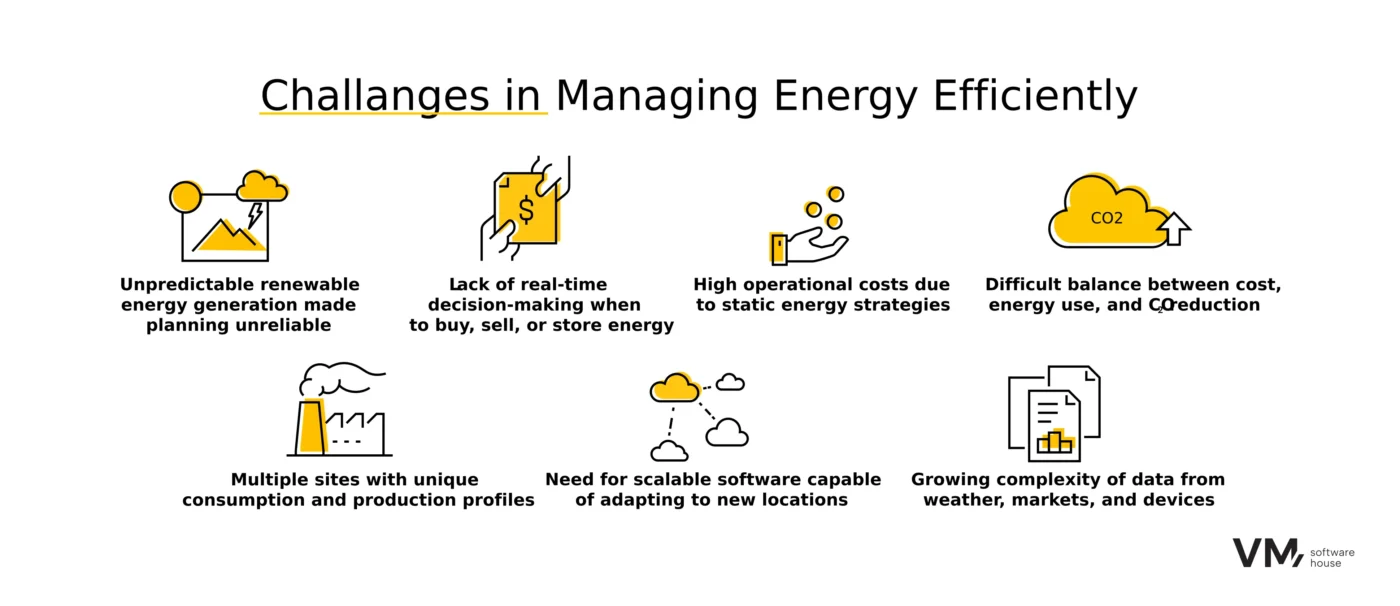
In the era of energy transition, the key issue is not only the availability of renewable energy, but also managing it effectively in real time. Wattstor needed a scalable and intelligent software solution that could:
- Enable dynamic decision-making: when to buy from the grid, when to sell surplus energy, and when to use stored battery power
- Optimize operations based on the selected goal: minimizing energy consumption, reducing operational costs, or lowering CO₂ emissions
Operate across multiple sites with diverse energy profiles.
Solution
We began the project in close collaboration with the client’s team, focusing on analyzing real operational needs and the technical constraints of the deployment. Together, we reviewed various forecasting and optimization approaches, selecting those that best balanced accuracy, complexity, and scalability.
Based on this, we designed a flexible software solution composed of three key components:
- Forecasting Module – generates precise energy consumption and production forecasts for each site, based on historical and external data (e.g., weather).
- Optimization Module – recommends operational strategies for when to buy, sell, or use stored battery energy, depending on client-defined priorities (cost, energy use, CO₂ emissions).
- Model Management System – allows for creation, storage, and updating of local predictive models tailored to the specifics of each site.
The solution was deployed in a cloud environment to ensure high availability, easy scalability, and fast rollout across new locations. Thanks to an iterative development process, the client’s team was able to continuously test new system versions and provide targeted feedback that informed ongoing improvements.
Results
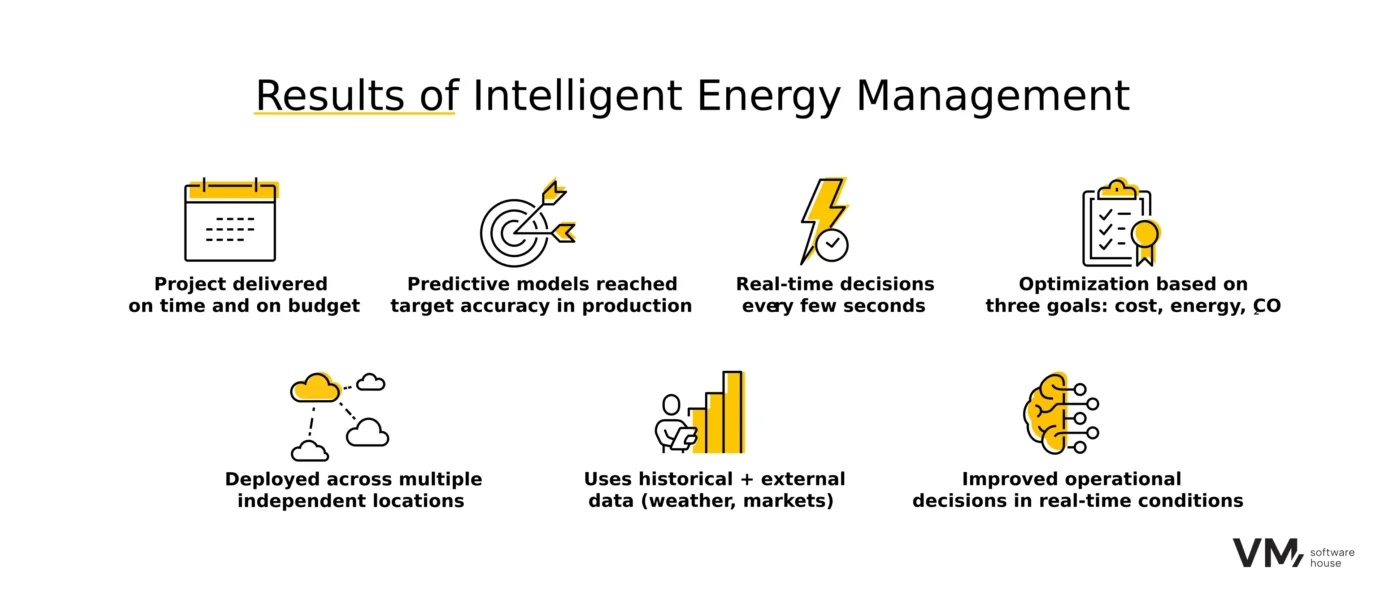
- The project was delivered on time and within budget.
- The developed predictive models achieved the expected accuracy, as confirmed in production environments.
- The system significantly improved real-time decision-making, enabling the client to respond dynamically to changing energy prices, weather conditions, and consumption profiles.
From the customer
They delivered the project on time and within budget despite ambitious goals and tight deadlines.

Zdenek Machek
Head of Software Development

Design, Development, DevOps or Cloud – which team do you need to speed up work on your projects?
Chat with your consultation partners to see if we are a good match.