











 AI/ML
AI/ML  Software Development







Monitoring Tool & Predictive Maintenance
Real-time machine data and intelligent alerts on Grafana
Complete Visibility and Control Across Your Entire Production Environment
Benefits of Using Grafana as a Monitoring Solution
Instead of reacting after a failure, you can prevent it
Up until now, maintenance was reactive: a machine would fail, production would halt, and the team would analyze the causes and look for a fix.
Monitoring Tool reverses this pattern. By monitoring and analyzing real-time data, you can detect early warning signs and plan service actions before they affect production. This elevates technical data—such as vibration, voltage, and temperature—from mere archival logs to predictive and planning tools that support stable, efficient production. This is the essence of Predictive Maintenance: data analysis helps identify patterns—performance drops, vibrations, overheating, or elevated voltage—and advises which components require attention before they cause downtime. That way, you perform servicing exactly when needed—avoiding costly surprises.With Monitoring Tool, you can:
set customized warning and alert thresholds,
monitor which parts wear out faster and under what conditions,
plan maintenance and component replacements at the optimal time,
reduce the risk of unplanned downtime and shorten response time.
What challenges are manufacturing companies facing today?
Lack of real-time data access
70% of companies don’t use real-time machine data, leading to delayed decision-making.

Time-consuming reporting
Manually preparing reports extends the analysis process by up to 40%, burdening technical teams.
Scattered information
Machine, sensor, and IT system data are siloed, making it difficult to identify root causes and correlations.

Unplanned downtime
Unplanned downtime can cost up to 10 times more than scheduled maintenance. Without predictive capabilities, companies waste time and resources on unpredictable repairs.

How does Monitoring Tool solve these problems?
Complete production overview
Data from machines, sensors, and systems is centralized—giving you a clear, consolidated view of operations.
Data-driven decisions
Real-time and historical readings enable teams to make informed technical decisions—no guesswork required.
Act before the problem escalates
The system triggers alerts at the first sign of deviation, allowing maintenance to be scheduled proactively.
Flexible architecture
Start with a single dashboard and scale the system across lines, plants, or locations.
Seamless integration
Monitoring Tool uses OPC Gateway—no PLC interference or costly infrastructure changes needed.
IT stability and security
The solution runs on-premises or in the cloud, aligning with your company’s security policies.
Metodology 4D

Discovery
Understanding the DNA of the problem before the first line of code is written
The Discovery phase allows for a deep understanding of the business challenge, user needs, and technological context. As a result, the project starts on solid foundations, and key assumptions are validated before development begins.
Key artifact
Standardized Concept Document

Our focus
Our activities
We analyze the client’s business and technological environment: from existing systems to user needs and strategic goals. We validate business assumptions, identify risks, and define the problem to be solved. The outcome is a coherent product concept that forms the foundation for the next stages of the project.

Definition
Translating knowledge and ideas into a concrete product plan
In the Definition phase, we transform insights from Discovery into a detailed solution design. This includes defining requirements, system architecture, and the user experience concept.
Key artifact
Product & Architecture Blueprint
Our focus
Our activities
We translate business goals into specific functional and technical requirements. We design UX prototypes, define the architecture, and plan the project implementation. This ensures development starts with a clear plan and minimal risk.

Delivery
Building and delivering reliable software
In the Delivery phase, we develop the final solution. We focus on code quality, clear communication with stakeholders, and a stable product release.
Key artifact
Production-ready product / deployment
Our focus
Our activities
Our teams build the solution using modern development practices and continuous integration. We regularly test the product and maintain transparent communication with stakeholders to deliver a stable, production-ready solution.

Direction
Transforming a product into a growing digital business
Direction is a phase of long-term product development. Instead of ending cooperation after implementation, we support clients in scaling solutions, introducing innovations, and building a competitive advantage.
Key artifact
Product development and innovation roadmap
Our focus
Our activities
Together with the client, we analyze product data, identify new growth opportunities, and plan future functionalities. We help scale the solution, optimize its performance, and build a long-term product strategy.
What do you gain by working with us?
- Real-time access to data – no more delays from manual reports.
- A solution tailored to your factory’s actual conditions.
- Automated analysis and reporting – faster response times.
- Reduced maintenance costs through planned servicing.
- A stable, scalable architecture ready for further automation.
- Technical and strategic support – at every stage of the project.

Where is Monitoring Tool & Predictive Maintenance used?

Manufacturing sites with assembly lines and CNC machines

Automotive, aerospace, and heavy industries

Energy and FMCG sectors
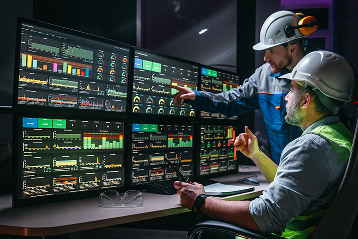
Companies investing in predictive maintenance and digital transformation
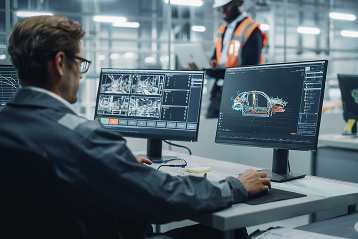
Series production where consistency and quality are critical