











 AI/ML
AI/ML  Software Development







OEE Booster
AI system for faster fault diagnosis and centralised technical knowledge management
A new standard in maintenance powered by AI
Why implement AI in maintenance operations?
Until now, knowledge was scattered – across files, notes, and the memories of experienced staff. Every failure meant searching for answers, asking questions, and losing time. OEE Booster introduces a new operational model: knowledge is always available, always up-to-date, and contextual – integrated in one place, powered by AI and enhanced with a RAG (Retrieval-Augmented Generation) architecture. Responses are generated exclusively from approved company documentation. Users can always see the source of each answer and verify the information themselves.
This is not just a chatbot. It’s a system that retrieves specific technical data, cites sources, and supports operational decisions – reducing MTTR, eliminating recurring issues, and empowering operators to act independently. For example, a technician can ask, “What should I check if the packaging machine stops during the production process?” and receive an answer within seconds based on the operating manual or the history of previous service tickets.
Common challenges in maintenance operations

Knowledge is scattered and unavailable when needed
Documentation, service notes, and failure history – scattered across various systems and files. Often stored in multiple formats and languages, making it difficult to locate the right information quickly during equipment failures.

Dependence on experienced employees
Operational knowledge is undocumented, “scattered across shifts,” and difficult to transfer to new employees. When an experienced technician leaves the company, their practical knowledge often leaves with them.

Excessive time to diagnose and repair (MTTR)
Employees waste time searching for information and asking questions, relying on intuition rather than data. Before implementation, the average diagnostic time is approximately 50 minutes.

Recurring errors and lack of standardization
The same failures are solved repeatedly from scratch, with no systematization or prevention in place. Without access to the history of previous service tickets, proven solutions cannot be reused.

How OEE Booster works – features that deliver real results

Centralization of technical knowledge
It integrates documentation, tickets, checklists, and logs, all accessible in one place. Supports PDF, Word, Excel, text files, scanned documents and images through built-in OCR capabilities. Can be integrated with SharePoint, DMS, CMMS and other internal enterprise systems.
Natural language search
Ask questions like “how to fix error E23 on line X?” and get precise answers from the documentation. Queries can be entered in any language. The system responds in the user’s preferred language, even if the original documentation is written in a different language – an ideal solution for multinational manufacturing teams.
24/7 availability: regardless of shift or experience level
The system supports everyone, from novice to expert, regardless of knowledge level. Every shift has immediate access to the knowledge and work history of the previous shift.
Root Cause Analysis and continuous improvement
Helps identify root causes, generates topics for TPM/RCM meetings, and supports Kaizen initiatives.
Data security and control
Processes only client data, operates on-premise or in the cloud in accordance with IT policy.
Support for Autonomous Maintenance (AM)
Up to 40% of failures resolved without maintenance team involvement, directly by operators. This is possible by configuring dedicated views and response modes for different user roles. Operators receive more detailed guidance, while engineers receive concise and technical answers.
Metodology 4D

Discovery
Understanding the DNA of the problem before the first line of code is written
The Discovery phase allows for a deep understanding of the business challenge, user needs, and technological context. As a result, the project starts on solid foundations, and key assumptions are validated before development begins.
Key artifact
Standardized Concept Document

Our focus
Our activities
We analyze the client’s business and technological environment: from existing systems to user needs and strategic goals. We validate business assumptions, identify risks, and define the problem to be solved. The outcome is a coherent product concept that forms the foundation for the next stages of the project.

Definition
Translating knowledge and ideas into a concrete product plan
In the Definition phase, we transform insights from Discovery into a detailed solution design. This includes defining requirements, system architecture, and the user experience concept.
Key artifact
Product & Architecture Blueprint
Our focus
Our activities
We translate business goals into specific functional and technical requirements. We design UX prototypes, define the architecture, and plan the project implementation. This ensures development starts with a clear plan and minimal risk.

Delivery
Building and delivering reliable software
In the Delivery phase, we develop the final solution. We focus on code quality, clear communication with stakeholders, and a stable product release.
Key artifact
Production-ready product / deployment
Our focus
Our activities
Our teams build the solution using modern development practices and continuous integration. We regularly test the product and maintain transparent communication with stakeholders to deliver a stable, production-ready solution.

Direction
Transforming a product into a growing digital business
Direction is a phase of long-term product development. Instead of ending cooperation after implementation, we support clients in scaling solutions, introducing innovations, and building a competitive advantage.
Key artifact
Product development and innovation roadmap
Our focus
Our activities
Together with the client, we analyze product data, identify new growth opportunities, and plan future functionalities. We help scale the solution, optimize its performance, and build a long-term product strategy.
What do you gain by implementing OEE Booster with our team?
- 50–70% reduction in downtime
- Reduced MTTR from approximately 50 minutes to 3-5 minutes
- Increased operator autonomy (AM – Autonomous Maintenance)
- Retention and accessibility of operational knowledge
- Full security and compliance with IT policy
- The project becomes profitable with as little as a 10% reduction in downtime
What do you gain by implementing OEE Booster with our team?
OEE Booster is applicable in:
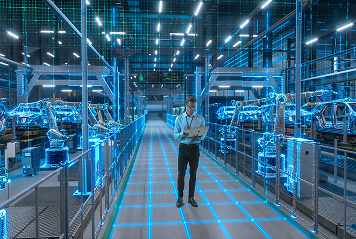
Large-scale manufacturing facilities with complex machine infrastructure
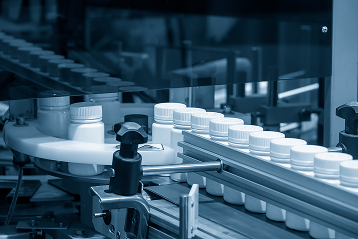
Pharmaceutical, food, automotive industries and logistics

Organizations operating in shifts and with high staff turnover

Companies investing in standardization, Autonomous Maintenance, and AI-driven maintenance operations
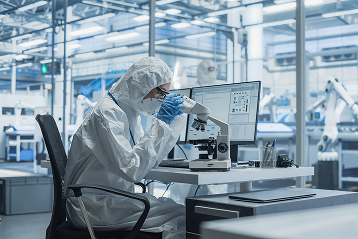
Discrete and high-volume manufacturing environments where response speed and operational continuity are critical