



Artificial intelligence is increasingly being adopted in manufacturing, logistics, and finance. However, some projects showcase its potential in far less obvious areas.
One of them is a project carried out together with NeuroSYS.
The goal was simple: to monitor shrimp growth in real time.
It may sound unusual, but the problem we were solving is very familiar to many companies:
- lack of data during the process
- lack of operational control
- decisions made with delays
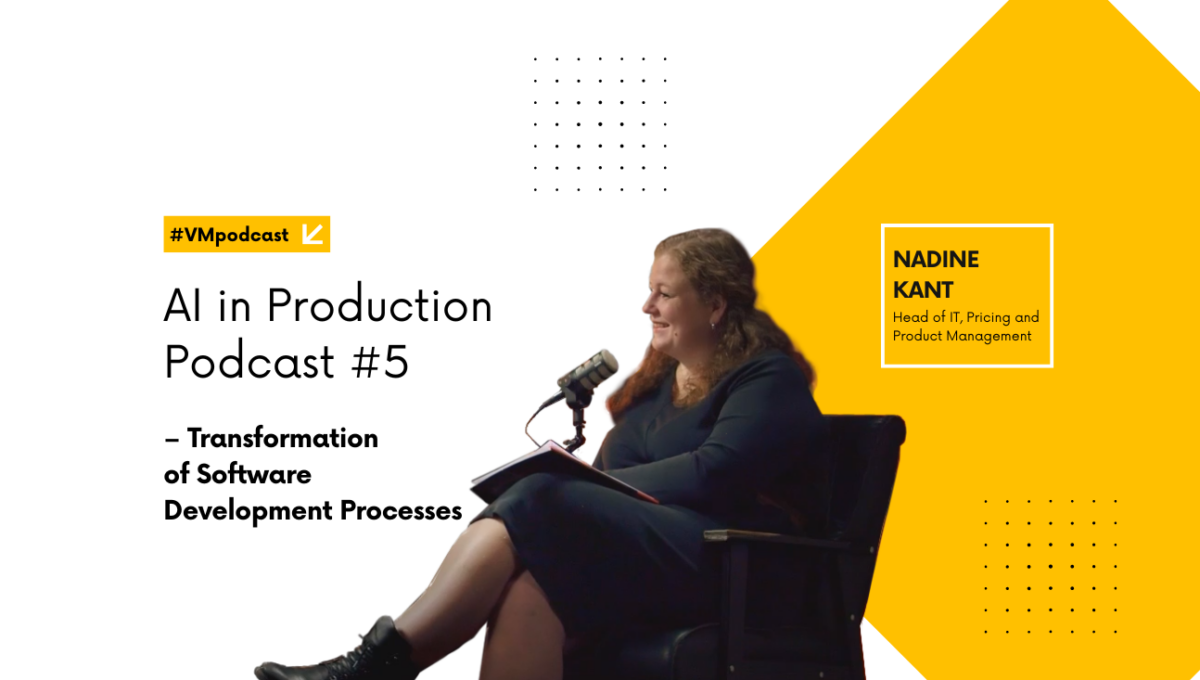
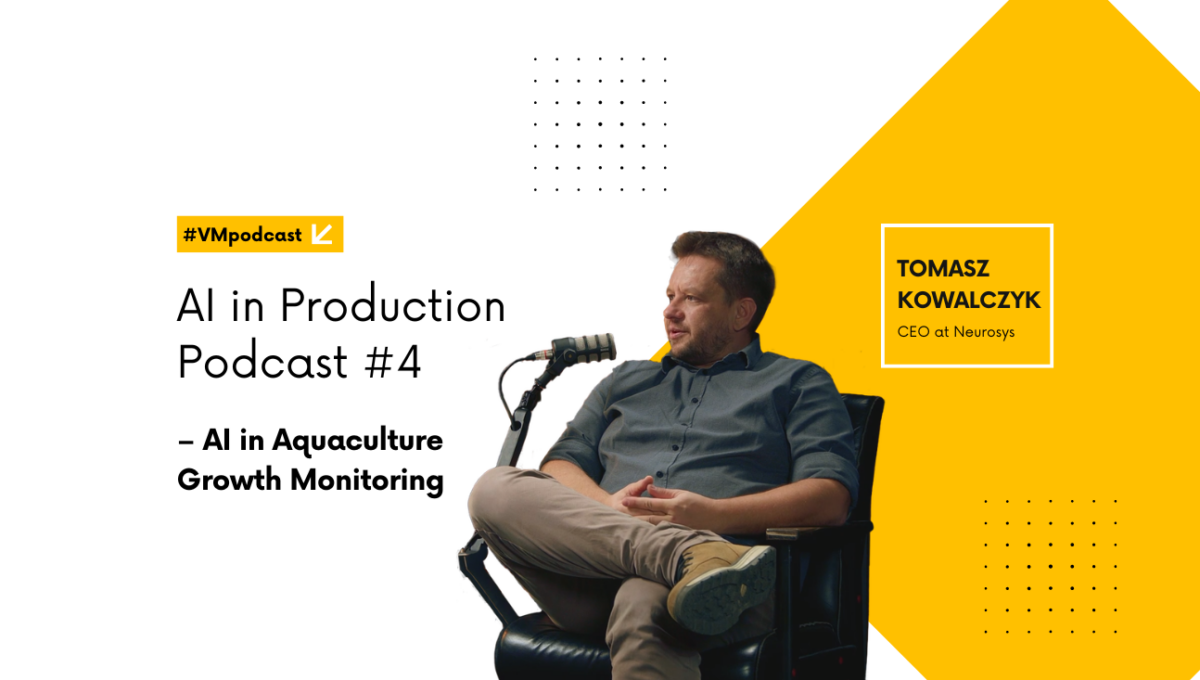
We discuss the behind-the-scenes of this project in the podcast “AI in Production.”
Table of Contents
What is the podcast episode about?
In a conversation with Tomasz Kowalczyk, CEO of NeuroSYS, we discuss a project involving the implementation of an AI system for:
- real-time shrimp growth monitoring,
- biomass and mortality analysis,
- detection of stress and diseases,
- optimization of the entire farming cycle.
The key challenge was shifting from manual measurements taken at the end of the process to continuous, real-time data monitoring throughout the entire cycle.
The problem: lack of in-process data
In traditional shrimp farming, the core problem is simple:
There is no visibility into what happens during the production cycle.
The process takes several months, and results are only known at the very end. Biomass is measured only after harvesting.
As Tomasz explains:
“Without artificial intelligence, this was only possible at the end of the process, when the shrimp are harvested and weighed.”
This means optimization is practically impossible. We only react when it is already too late.
Start by understanding the process
Before any AI model was created, the team had to understand the client’s business.
This meant stepping into the world of aquaculture and learning the details of shrimp farming:
- shrimp life cycle,
- environmental conditions,
- impact of light, temperature, and density,
- real operational challenges.
As Tomasz emphasizes:
“First, we had to understand the entire farming cycle.”
This is the Discovery phase. Without it, most AI projects end up as technological experiments without real business value.
Value for the client:
- clearly defined problem,
- better project decisions,
- avoidance of unnecessary costs.
What should actually be measured
The next step was defining exactly what needed to be measured.
It turned out that simply counting shrimp was not enough.
The system had to:
- count the population,
- measure the length of individual shrimp,
- estimate weight,
- analyze growth rate,
- detect mortality.
- And all of this in real time.
This is the Definition phase, where the foundation of the entire solution is built.
Value for the client:
- well-designed system,
- reduced risk,
- real business usability.
AI in the real world
The biggest challenges appeared during the implementation phase.
This was not a clean, sterile data science problem. This was the physical world.
The system was based on several key components.
Cameras
Instead of building an expensive system from scratch, iPhones were used as cameras.
An application was developed that:
- takes photos,
- sends them via Wi-Fi,
- transfers data to a central system.
AI algorithms
The system used computer vision to:
- detect shrimp,
- count them,
- measure their length,
- estimate biomass.
Technical challenges
The environment was highly demanding:
- light reflections on the water,
- changing lighting conditions,
- fast shrimp movement,
- overlapping objects.
As Tomasz describes:
“Shrimp move very fast, overlap with each other, and are observed through water.”
This is a classic example where AI must operate in far-from-ideal conditions.
Value for the client:
- a working system, not just a model,
- integration with the process,
- access to operational data.
Breakthrough: real-time data
The biggest change was simple, yet groundbreaking.
Instead of data available only at the end of the process, data became available at all times.
This makes it possible to:
- monitor growth,
- analyze trends,
- react immediately.
From a business perspective, this is a major qualitative shift.
Post-implementation development
The greatest value emerged after the system was launched.
The project was expanded with additional functionalities.
Disease detection
The system helps identify health issues at an early stage.
Stress analysis
This is one of the most surprising aspects of the project.
“A stressed shrimp changes the color of its tail from transparent to red.”
With image analysis, it is possible to:
- detect abnormal conditions,
- reduce mortality,
- improve farming efficiency.
Commercialization
The solution is being developed into a product:
- more universal camera systems,
- easier deployment,
- scalability.
This is the Direction phase.
Value for the client:
- continuous improvement,
- competitive advantage,
- new business opportunities.
AI beyond the factory
This project highlights one important thing.
AI is not limited to typical industrial applications.
It can be used wherever:
- there is a physical process,
- data is missing,
- decisions are delayed.
That is why similar solutions are emerging in:
- fish farming,
- agriculture,
- food production,
- animal monitoring.
On our website, you can also find a case study of this solution, where we present implementation details and business results.
Listen to the podcast episode
If you want to see what AI looks like in practice:
- how to build solutions in challenging environments,
- what implementation looks like from the inside,
- how to connect AI with real business,
listen to the conversation with Tomasz Kowalczyk from NeuroSYS.