




Table of Contents
Why Companies Need a Central Knowledge Base
Modern enterprises operate in an environment where the speed of decision-making is just as important as accuracy. Operational, sales, product, and customer service teams must make hundreds of micro-decisions every day, all of which add up to real business outcomes. The challenge is that much of the company’s knowledge is scattered—across PDFs, Excel sheets, CRM systems, Confluence notes, or even in employees’ heads.
According to McKinsey research, employees spend an average of 20% of their work time searching for or recreating information. For an organization with 150 employees earning an average annual salary of $60,000, this amounts to as much as $1.5M per year in “search costs.” If that time were cut in half, the company could save around $750,000 annually—pure efficiency gains and real employee hours redirected toward value-creating work.
This is why companies increasingly need an internal knowledge system powered by large language models (LLMs)—a central knowledge repository accessible through simple natural language queries.

What Is an LLM-Powered Knowledge System
An internal LLM-based knowledge system can be compared to an intelligent assistant that knows all of a company’s processes, products, pricing, procedures, and project history. Instead of digging through hundreds of documents, an employee can simply ask:
- “What is the sales department’s organizational structure?”
- “What is the price of product X for a client in the financial sector?”
- “What are best practices for handling complaints?”
Answers are generated instantly and are based on structured data previously ingested into the system. Unlike traditional knowledge bases that require manual searching, LLM systems act as an intelligent interface layer—understanding query context and connecting information from multiple sources.

How the System Integrates with Existing Environments
A key advantage of the solutions we implement is seamless integration with existing tools and processes. An LLM-powered knowledge system can connect with popular communication platforms (Slack, Microsoft Teams), CRMs (Salesforce, HubSpot), document management systems (SharePoint, Confluence), or helpdesk tools (Zendesk, Jira Service Management).
This way, employees get intelligent answers without changing their daily habits—the system works within the environment where they already spend most of their time. Integration also includes SSO mechanisms and access controls, ensuring the highest security standards are maintained.

Key Business Benefits
Increased Productivity and Faster Decision-Making
According to IAKM research, organizations that have implemented knowledge management systems see on average a 25% increase in productivity and a 20% reduction in operating costs. This happens because the time required to search for information drops dramatically, while access to up-to-date data minimizes the risk of poor decisions.
Moreover, an LLM doesn’t just return information—it can also assist with interpretation. For example, if a manager asks: “Which offer would be most competitive for a retail client?” the system can combine pricing data, negotiation history, and market benchmarks to suggest the best solution.
Security and Consistency of Knowledge
One of the key challenges companies face is inconsistent information. Employees often use different versions of documents, while informal knowledge circulates through emails or chat tools. An LLM-based system acts as a “single source of truth”. Data is centralized, updated, and version-controlled, eliminating the risk of using outdated information.
With built-in access controls, the company can also define who can access specific knowledge segments—critical for financial or customer-sensitive data.
Return on Investment
Building an internal knowledge system is an investment with a fast payback. According to Bloomfire, companies implementing knowledge management solutions achieve ROI within months, not years. Every hour saved through automated knowledge retrieval translates into measurable financial savings.
For instance, if the system shortens new employee onboarding from 3 months to 2.5 months, the company gains two extra weeks of productive work—adding up to hundreds of thousands of dollars annually in large organizations.

How We Implement LLM Knowledge Systems – The 4D Methodology
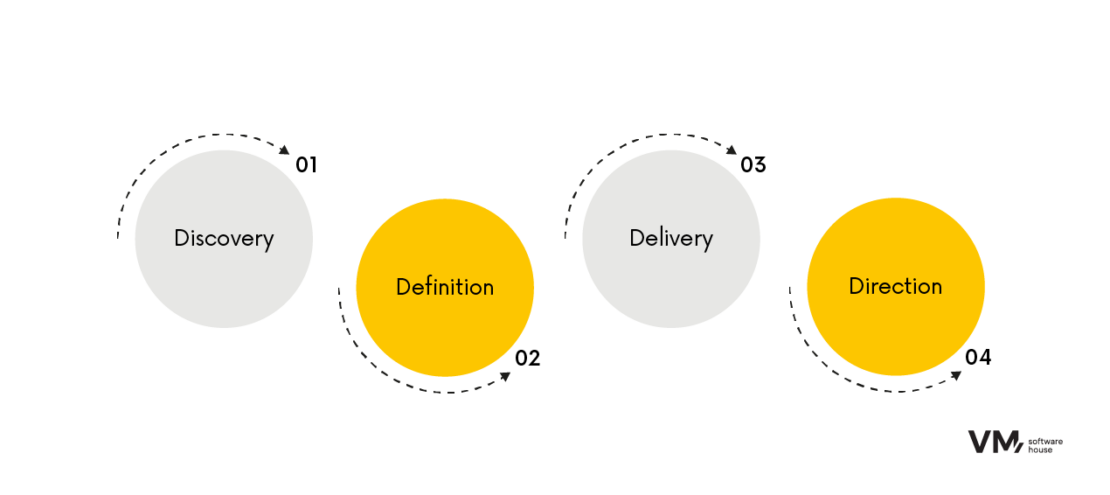
Every project is unique, but we follow a proven framework that ensures smooth execution from idea to full solution. Implementing an internal knowledge system is not just a technology project—it’s a strategic transformation requiring a clear methodology. Our 4D model covers four essential stages:
Discovery – Identifying Needs and Resources
Understanding what problems the company wants to solve and what data it already has. We analyze knowledge sources such as product documentation, pricing, sales history, procedures, and organizational structure. The goal: pinpoint areas where LLM delivers the fastest and most measurable benefits.
Definition – Designing Architecture and Rules
Based on findings, we define system architecture and governance. This includes technology choices (e.g., LLM with RAG, vector databases, knowledge graphs), security standards, and roles responsible for data quality and updates.
Delivery – Building and Testing the Solution
The system is developed, integrated, and tested. We begin with a pilot in a specific department—such as sales or customer service—to quickly validate effectiveness. Delivery also includes employee training and iterative improvements based on feedback.
Direction – Scaling and Long-Term Growth
Once the pilot proves successful, the system is scaled across departments and processes. This stage also includes KPI monitoring, continuous data quality improvements, and the introduction of new features to maximize long-term value.
Practical Use Cases
An implemented knowledge system can serve multiple practical functions in an organization’s daily operations:
- Employee Onboarding – new team members quickly learn processes and procedures with instant access to knowledge.
- Customer Support – agents receive quick answers to customer questions, boosting satisfaction and reducing handling time.
- Sales and Negotiations – sales teams can instantly check current offers, price lists, or client collaboration history.
- Project Management – managers gain access to past project experiences, helping avoid mistakes and streamline planning.
- Compliance and Audits – easy access to regulations and company policies minimizes risks of errors and non-compliance.
These use cases show that a knowledge system is not just an “IT tool” but a real catalyst for business improvements across the entire organization.
Measuring Success
The key to securing executive buy-in for an internal knowledge system is hard numbers. That’s why it’s important to define KPIs early on to demonstrate ROI.
The most common metrics include:
- reduction in time spent searching for information,
- shorter onboarding time for new employees,
- fewer errors caused by outdated data,
- increased employee and customer satisfaction,
- reduced number of tickets and queries to internal experts.
According to the Ariglad report, these metrics are not only easy to measure but also highly persuasive for decision-makers, as they directly translate into financial savings and improved efficiency.
The Future of Internal Knowledge Systems
This is only the beginning. LLMs will increasingly integrate with business tools, creating environments where access to knowledge is instant and decisions are data-driven, not guesswork. In the future, knowledge systems will not only answer questions but also proactively suggest solutions and assist employees in planning actions.
Building an LLM-powered internal knowledge system is not just a technological step—it’s a strategic business decision. Companies that adopt such systems make faster decisions, eliminate information chaos, protect organizational knowledge, and achieve real savings.

Our team can lead the entire process—from analysis to implementation and system evolution. If you want your organization to work smarter and ensure employees always have access to the knowledge they need, contact us to explore implementation possibilities.