














 AI/ML
AI/ML  Software Development







AI Automates Geotechnical Documentation Analysis and Speeds Up Proposal Preparation

Client
A US-based geotechnical company preparing proposals (RFPs) for soil investigation and drilling projects. During the bidding process, it analyzes extensive geotechnical documentation, including borehole logs and graphical representations of soil layers. Each project has a different document format, requiring the involvement of experienced specialists with domain expertise.
Challenge
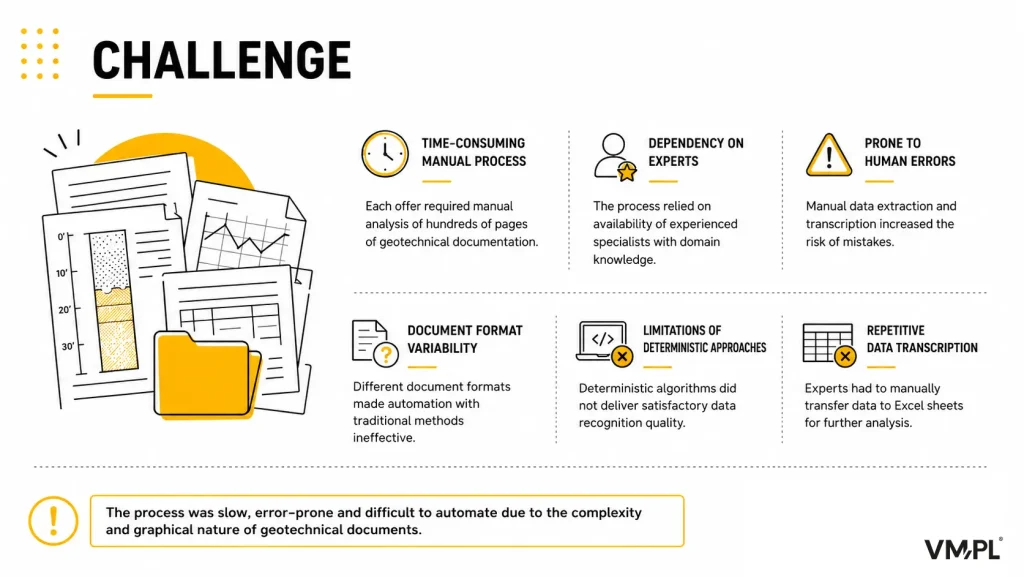
Preparing each proposal required manual analysis of hundreds of pages of PDF documentation. Experts identified soil layers in geotechnical drawings and then transcribed the data into Excel spreadsheets used for further analysis.
The process was:
- time-consuming and monotonous,
- dependent on the availability of qualified specialists,
- prone to human error,
- difficult to automate with classic methods due to the variety of document formats.
A deterministic algorithm-based approach was also tested as part of the work, but it did not deliver satisfactory data recognition quality.
Solution
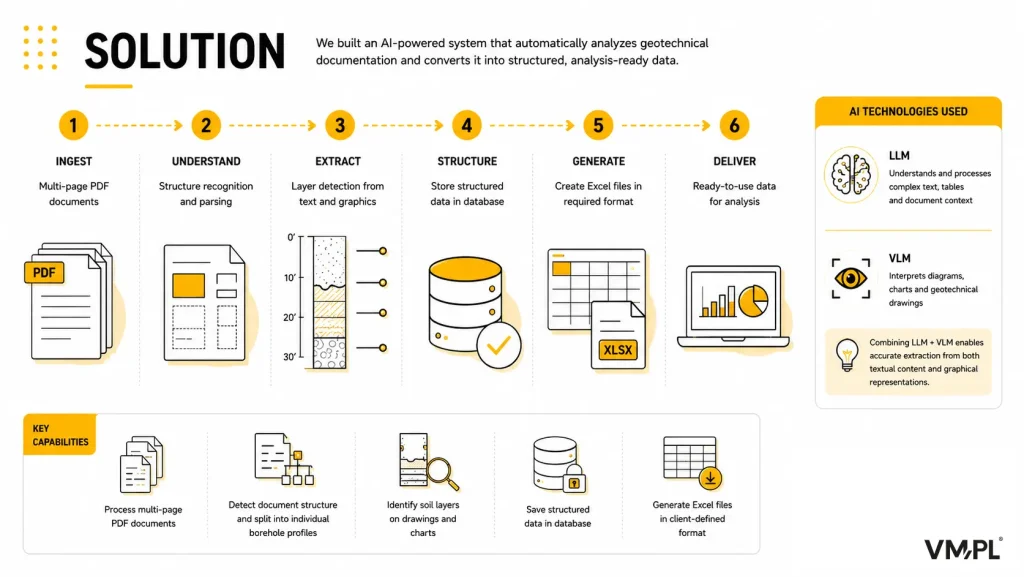
A key element of the solution was the use of Large Language Models (LLMs) and Vision-Language Models (VLMs), which combine the analysis of images and language. This made it possible to automatically process documents containing both textual content and visual elements, such as tables, charts, diagrams, and technical drawings.
This allows the system to analyze complex geotechnical documentation, recognize information presented in drawings, and convert it into structured data.
The solution:
- processes multi-page PDF files,
- recognizes document structure and splits it into individual borehole logs,
- identifies soil layers in drawings,
- saves structured data to a database,
- automatically generates Excel spreadsheets in the format required by the client.
The project began with a Proof of Concept phase, during which the effectiveness of the AI models was verified on the client’s real data, and evaluation sets were prepared to compare the results with analyses performed by experts.
Results
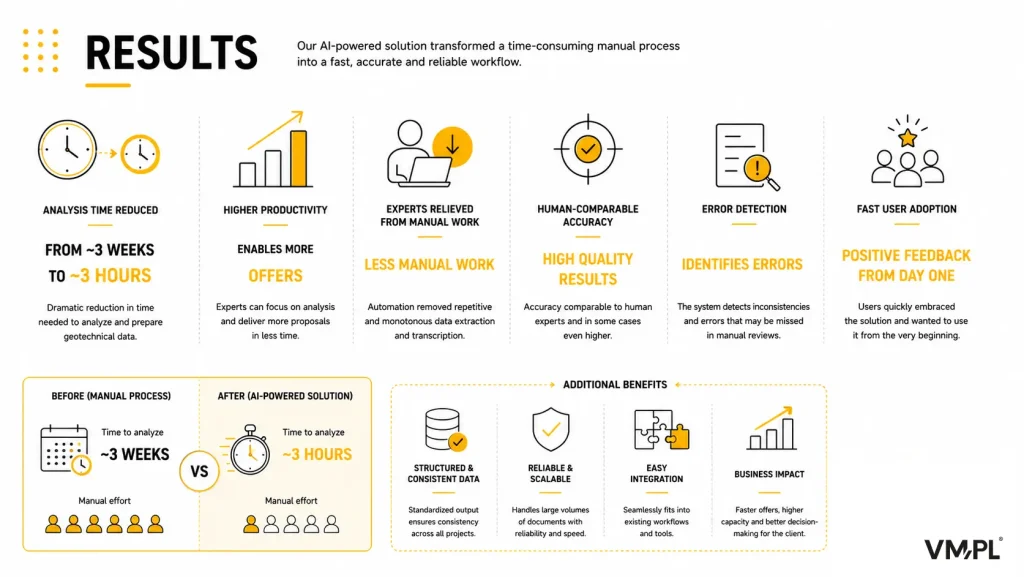
The implementation of the solution significantly streamlined the proposal preparation process.
Key outcomes included:
- reducing document analysis time from approximately 3 weeks to around 3 hours,
- freeing subject matter experts from repetitive manual work,
- enabling teams to spend more time on analysis and prepare a greater number of proposals,
- achieving analysis quality comparable to human experts and, in some cases, even exceeding it, as the system identified errors present in manually prepared data,
- rapid user adoption, with employees eager to use the application already during the initial rollout.

Development of an Advanced Telecommunication Module for Next-Generation Vehicles
Design, Development, DevOps or Cloud – which team do you need to speed up work on your projects? Chat with your consultation partners to see if we are a good match.
Jakub Orczyk
Member of the Management Board/ Sales Director VM.PL
Book a free consultation